
The Dangers of Giving a Child a Smart Phone
Updated: Aug 3

Think about the time when cell phones first became widely available
The late 90s and early 2000s was when the cell phone first went beyond a novelty to being common-place. There were no "smart phones": a phone could not yet connect to the internet and there were no Apps per-se (in how we understand them today; and while some had photo capabilities, most of these devices were used for texting and calling only.
Before cell phones came along people would leave a message on your answering machine if you were not physically there to answer the call. If you were out and about, you had to use a pay phone or use someone else's home or business landline to make a call, even in the case of an emergency. There were boundaries that we inherited from previous phone networks. It was rude to contact people before 9am or after 9pm.
Cell phones were a fantastic innovation when they were first available. People could be more connected than ever before because they could carry a mobile communications in a pocket, rather than being tied to a landline. They made it possible for drivers to contact people while on the road in case of an emergency or to ask for directions. Contractors and remote workers were able to increase productivity due to not having to be tethered to their desk when communicating with their staff or customers.
However, children did not have cell phones. Due to their high cost, they were an adult tool and even then, not all adults had one. Some careers obviously required a cell phone more than others and people still used landlines and pay phones for years long after cell phones were available for purchase.
The "cell phone culture" is terrible for the developing mind of a child
Cell phones and technology are not the problem.
The problem is a lack of parenting and self control.
Fast forward to today when carrying a smart phone is not only common, but necessary in most situations. Whereas before a cell phone was a tool that helped with productivity and mobility -- today they are a crutch for socialization and an addiction. And many parents use these devices as a kind of babysitter: give your child a phone and 2, 3 or 4 hours can go by quickly. This phenomenon is extremely dangerous to our children and it is time for parents to consider safe other alternatives to giving a child an addictive device that warps then reality and steals their childhood.
We have all witnessed the ways some parents abuse smart phones with their children and parenting which we will go over in more detail in this article. Some parents use smart phones to "supervise" their children instead of having a trusted adult supervise and care for them. Parents are encouraging their children to abuse smart phones in school which is causing large scale problems in schools across the country. Parents use cell phones as a way for their children to "socialize", using it for unlimited, unsupervised texting and online gaming between children instead of arranging board game nights or healthy interaction with their friends in real life. Children are dying or getting arrested or getting inured due to the almost daily news stories of dangerous and illegal TikTok "challenges". And where do they become exposed to such crazes? From the tablet or smartphone that their parents provide them.
Cell phones have become a social crutch facilitating counterfeit relationships


People have become so focused on their virtual life that they do not seem to participate in real-life heathy skills or activities
Cooking, reading, exercising, pet care, doing art projects and going on day trips seem to have made an exit in our culture with the rise of smart phone culture.


Even if you try to live a limited virtual life, it is almost impossible.
It seems like everything has an app to use, a subscription or a social media handle to follow for important updates.
It is almost impossible to visit a theme park without a smart phone. I miss the days when I could order food at a restaurant without being pressured to download their app.

People need to bring back manners when using devices. Put them away when it is time to interact with people in real life.


Hello! We are veteran homeschoolers. We invite you to browse our website for articles about navigating the homeschool world, encouragement when making friends and limiting screen time for your family. Our site is not monetized.

Protecting the Children
There are so many situations in our world today where a person needs to have achieved a certain level of maturity to be able to successfully handle the dangers that are ever present in our world, especially mental and psychological dangers. In the past, our government enacted laws as an extra layer of protection for children. Even so, it is still the parents' job to be vigilant upon any and all dangers of the world, not just the ones the government decides to make laws about. For example:
You need to be 17 to purchase an "R" rated movie ticket. The rating system for films and video games are there to equip parents to protect a children's innocence.
You need to be 18 years old to purchase spray paint in many states.
The "DARE" program in school was a full campaign to "keep kids off drugs" and there were many community driven programs to deter children from using drugs.
There is a federal law prohibiting the sale of tobacco and alcohol to children under the age of 21. Smoking advertisements were banned on TV after 1970. There were huge campaigns for preventing drunk driving. MADD to display smashed car to raise awareness about drunk driving
We have a smart phone crisis in our country and it is especially impacting our children. The studies are widely available. However, it seems that many parents seem to completely ignore the known dangers of unlimited access to the internet and smart phone apps.
The dangers of smart phones in children's hands are obvious and well known.
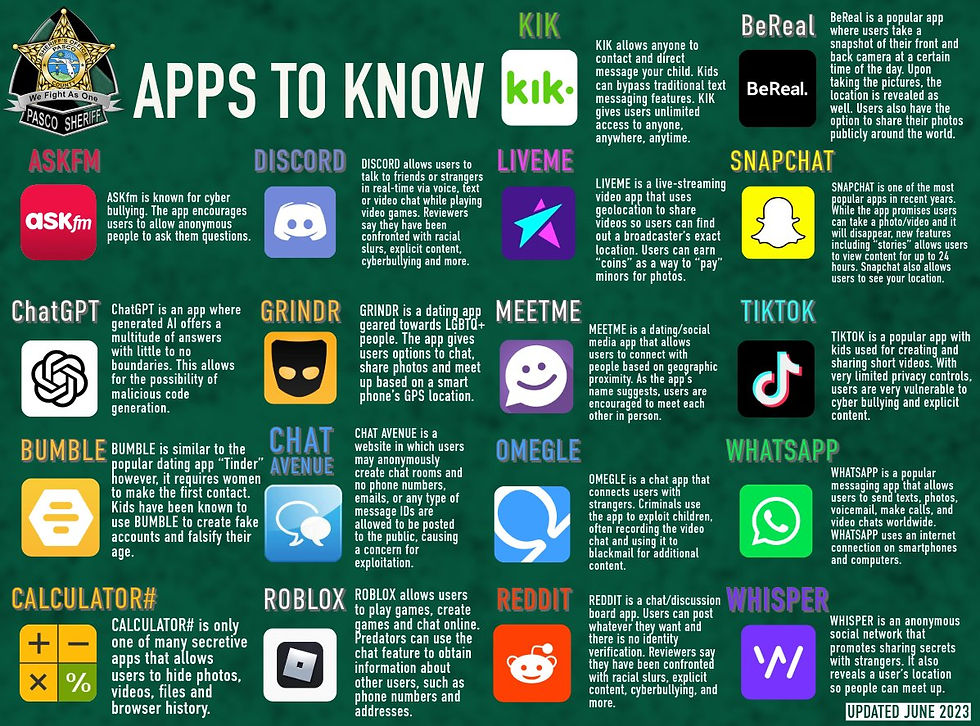
There are countless stories of cyberbullying, deadly and illegal Tictok challenges all over the Internet. The internet is also saterated with studies and warnings like the ones below that seem to be ignored.


Children and teens are too young to understand the dangers of taking photos with a smart phone.
Click to see our article about the dangers of posting photos and videos of children on the internet.
Parents use cell phones as a way to "supervise" their children.
In the interview, a child predator discussed what he looks for when finding a target. He said he looked at the family. His words illustrated the importance of having parents that are physically present with their children!
This again seems obvious to me.
Surveillance parenting is wrong!
Parents opting to give their unaccompanied children a smart phone to track their child instead of having a trusted caretaker with them is creating a culture of lazy, absent Faux DINK parents. We need to stop with the idea that you can outsource parenting. That is to say, you can delegate authority, but you can't delegate responsibility.
Children need adult supervision. They need a responsible adult who will be physically present to correct the child's behavior and also protect them from dangerous people and situations. Parents should not need to tell their children about "stranger danger" because they are never alone with a stranger or without a trusted caretaker in the first place!
There is no reason I should see a child in a waiting room at a music school alone. Young children are getting struck by school busses because they are walking to and from school alone. They are getting kidnapped: this 7-Year-Old Girl was Kidnapped By Man As She Got Off School Bus in Minnesota .

You are Your Child's DRI (Direct Responsible Individual)
My husband's industry (technology) uses this acronym quite often. It is a clear way to assign responsibility for a specific subject/process/proposal. The DRI is a person who is working on the issue, responsible for the issue's outcome, and managing it directly. If the project fails they are held accountable, but the DRI person also gains the praise and reward if it succeeds.
We see a clear assignment of responsibility in other industries like the medical industry. When there is a shift change at a hospital, there is a protocol for the transition including communication from one medical professional on shift to the next person on shift. When we drive a car, you are the "DRI" if there was an accident and you were driving. When we hire an electrician to replace our water heater, he is legally assuming the role of the DRI, getting recognition in the industry but also liability if there are problems with the work performed within a certain time frame following the installation (whether it is his "fault" or not). The refrigerator delivery person is the DRI until we sign his form legally saying we received it. We could go on.
We have this in my home as well for our children. For example, they are in gymnastics and the gymnastics teachers are the DRI for teaching them gymnastics during the actual time frame of the class. When I take my children there, I am physically there up until their class starts and I am physically there when class ends to pick them up immediately. My children are never waiting idle in or around the building without a DRI outside of their designated class time. It is super weird and stupid that parents literally drop their young children off and pick them up at the curb in the busy parking lot, when there is literally no DRI responsible for their well being.
One reason we do not do "drop off playdates" or drop-off birthday parties is there is no DRI caring for my children. Yes, certainly kids should get together to play with their friends, but they should never be unaccompnaied. They should also be supervised and cared for by a trusted adult. Even if you don't specifically identify the DRI in a situation with a verbal agreement, the other parent "in charge" is the DRI when you drop your child off at their friend's house. When you do this you are indirectly assigning the responsibility to that parent, regardless of whether they consider themselves to be responsible or not. If a crime or tragedy were to happen to your child while they were there, the law would also see it this way.
What is the definition of a DRI for adult in this case? If your child got a splinter or a tick, would they know or feel comfortable asking for help from the parent in charge? If the other parent put on a movie for the kids, would they pick something age appropriate? Would they give your child a snack unaware or careless about your child's allergy to an ingredient? If their child bullies your child, would the parent correct the behavior or back-up their own child (the bully)? Would your child be able to contact you with the DRI's landline or cell phone if they really needed to? If you answered "no" to any of these, do not allow your child to go to a friends' house for a playdate, sleep over or bday party unaccompanied by you. Also, consider this when you are taking on the role of DRI for a child in your care. Click for tips for hosting a safe and successful playdate
Some "licensed and qualified" adults are not trustworthy
This is a sad truism in our world today: there many adults who engage in deviant and bizarre behaviors behind closed doors and they simply cannot be trusted. This is a symptom of moral decay and poor work ethic. Parents and businesses still should add layers of security because of this danger in our world, such as cameras, a dumb phone for your teen, parental proximity and involvement, background checks for babysitters etc.
Smart phones make it easy for adults to prey on children
Part of our job as parents is to protect our children from dangerous people and situations. The sheer neglect of parents in regards to unsupervised and unlimited access to everything that smart phones have to offer is facilitating crimes against children.
Every time I read about a predator teacher who sexually molests or has a "relationship" with a minor, I wonder how they were able to maintain the secret "relationship" for so long. Then I read the article and it makes perfect sense. Parents allow their children unsupervised access to literally anyone without parental knowledge or consent. Maybe the parent looks through their child's cell phone once in a while. However, at that point the damage and the crime has already been done.
The truth is that children should not be having private communications with teachers (or other adults) ever. There should always be a barrier of parents in between other adults to act as a gatekeeper. This seems so obvious to me: the rule of "2" (where two adults should always be present) is a solid principle when a child is with an outside party. My children have taken classes like gymnastics and music lessons over the years. We also have a babysitter. It is so bizarre to imagine any one of these adults ever needing to contact my child directly outside of "class" time. If there was a scheduling issue, assignment, class performance (grade) or homework that needed to be discussed, it would always be directed to us, the parents via text, phone or email.
Dear business owners:
If you run a business, consider using emails and phone numbers in lieu of social media apps to contact your customers about changes in your business like snow days, closing times or special news they should know. You might still have updates on your website or a social media page incase some people want to visit who are not subscribed.
If you run an organization geared for children, your communications should always go through the parents.
Parents do not seem to take "ticktock challenges" and online crimes seriously
Our culture has become so desensitized to online juvenile crimes and preventable trauma among children. Children should not have free rein on an adult device that is a gateway to dangerous content, such as a smart phone. It is ludicrous that preventable online problems have become too common. Children are literally dying and they are getting arrested due to the plain lack of supervision, boundaries and discipline that should come from their parents. The truth of the matter is that many parents are simply not parenting.
In the past it was probably appropriate for many of us to "agree to disagree" with others regarding parenting styles and decisions, because we all agreed upon a standard for what it meant to parent. However, our communities can no longer stay silent with the sheer amount of children making the news due to preventable "accidents" and criminal behavior.
When your child doesn't know that it is unacceptable to ride on a table on top of a moving vehicle, that makes it everyone's business. Stop it!
When your children are making threats to schools, that is everyone's business! This is a lack of parenting issue, not a smart phone problem!
And why was a 10 year old on social media in the first place? And, no this is not the first time we have heard a story like this one where children are making threats online.
Some parents are not parenting. It's as simple as that.


ENOUGH!
Is anyone thinking about how the children's lives and those around them are affected by negligent parents who won't limit screens?

Children and parents are making phones a problem in schools and it's prompting cell phone bans across our country.
I remember when I was in high school, our school had a strict cell phone ban. I had to use my parents' cell phone one day at school and I was so afraid that their flip phone would get taken away by a school staff member. I kept it in my bag and out of sight.
Today, cell phone problems in schools are making the news all too often. Why is that? It's a pretty simple solution to me. When children are at school, they must follow the rules, including rules that may prohibit the use or possession of a smart phone.
One argument parents have for children having phones at school is so parents and children will able to be in contact in the case of an emergency or a school shooting.
There are many obvious holes in the fallacy that your child needs a smart phone for emergencies.
Here is our response:
If you feel your chid's school is that dangerous, you should pull them out of that place. There are many resources available for homeschoolers including ones on our website to help with the transition.
Why don't you give your child a dumb phone? Just a flip phone with the ability to call or text? Many parents will not do this because the issue is not about communicating in case of an emergency, it's about a lack of parenting and lack of teaching discipline.
If the smart phones are for emergencies, then why do we see the "cell phone culture" so prevalent among children. Too often children play on phones at restaurants, during school lessons, at the grocery store, at playdates and other places where children should be "present".
If a phone really was meant for emergencies, why won't children follow the school rules and put the smart phones away during class and out of sight? Parents are enabling this behavior and schools lack the ability to police smart phone rules during school hours. You know smart phones are a problem at school! Why should schools have to implement the use of the yondr pouches if your children "only need them in the event of an emergency"?
You are asking for compassion by bringing up school shootings as a reason for your child to have round the clock access to their smart phone. This is wildly inappropriate. In reality you are insisting that your child's school allow your child unlimited access to their smart phone (and all of their apps) in the same way you do because you don't believe in limiting devices even in the case of a school lesson.
There is a simple solution to this issue: tell your children to put away their phone during class time and there won't be a problem. Tell your child that they must follow the rules of the school. Duh!

Cell phones are a way for parents to "pacify" their children.
Children's eyes are on cell phones in restaurants, when they are home from school, at a grocery store, in the waiting room at the dentist office etc. This is super dangerous. There are so many missed opportunities for teaching children how to behave themselves, interact peacefully with their peers and siblings, have good manners or people watch for good role models.
Our children are not allowed to use their devices at the table ever. They are expected to behave themselves. When we go to a restuarant they use the coloring sheets provided or I bring a bag of games and art supplies for us to use at the table. This is an opportunity for us to bond as a family and learn proper dining etiquette.
This is also an opportunity for children to learn other things. They can learn how to speak professionally to the server when they order their meal. They can watch the staff for their professional mannerisms. They can learn social cues and learn how we politely handle a conflict like a wrong order. They can learn how to sit quietly at a public place and conduct themselves appropriately.
Our children are also learning to be friends with their siblings and how to engage with strangers. Taking them to a restaurant to share an order of chicken parmesan and breadsticks while playing a trivia game are core memories that are the building blocks of their friendship. Why would we discount that and put a screen in front of their face?
On one occasion when we were eating at a restaurant, our server gave our children free ice cream due to their good behavior. We are a family of 6! This was such a great experience that wouldn't have happened if we let our children use their devices at the dinner table.
This is not a homeschool vs. public school issue. All parents should be teaching their children how to behave at the dining table and in public.

Parents: facilitate healthy play with your children.
When was the last time you saw a child playing outside in their yard on their bikes or in the sprinklers or the snow?
It is our observation that parents use cell phones for "socialization"
Children can contact their friends and interact using online smart phone games like Roblox instead of getting together with friends to play a board game, color with glitter pens, or ride scooters in the yard. Parents have no incentive to encourage their children to arrange a play date with friends (safe people in your circle) or buy screen free things to keep their mind creative when a smart phone or tablet is ready and available to pacify their child.
Children interacting with each other on smart phones is not healthy socialization.
Children need healthy play and interaction. They need a responsible parent to be physically present to supervise their play so that no bullying happens, crime does not happen and to keep them safe.
Encourage healthy play with your children!
There are also many non internet video games to choose from!


Buy a dumb phone for your teens if you think they need one
We have a teen at home. We purchased a flip phone for our household for him to use when the need arrises. They cost between $50 to $150 at any Target or Walmart. Or, buy a landline. This has become a new trend. It is also a great alternative to giving your child a smart phone. https://www.inc.com/fast-company-2/landline-phones-are-back-heres-why/91245044


Comments